Low-slung ranch roof: tie in at the eave or step the cover down?
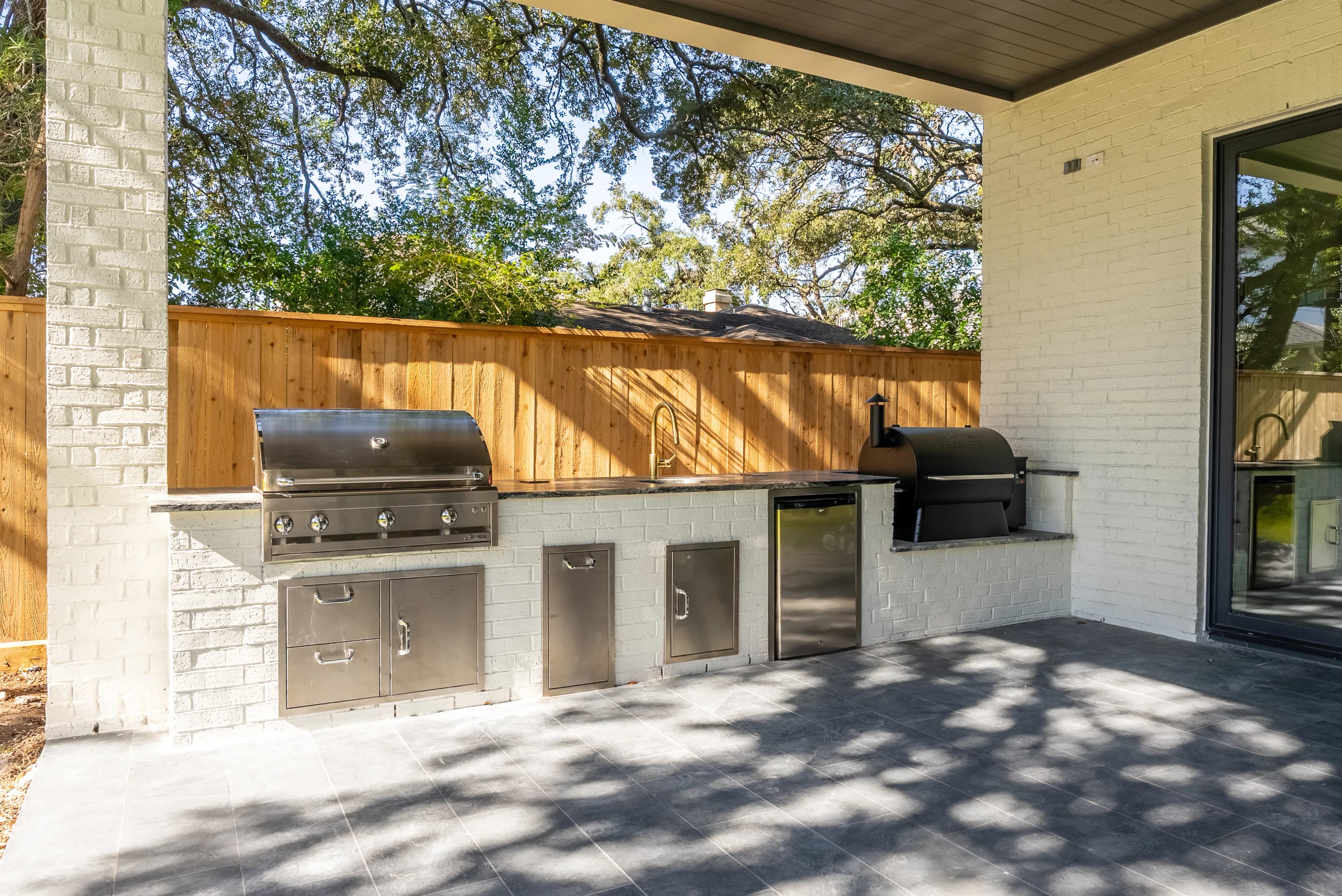
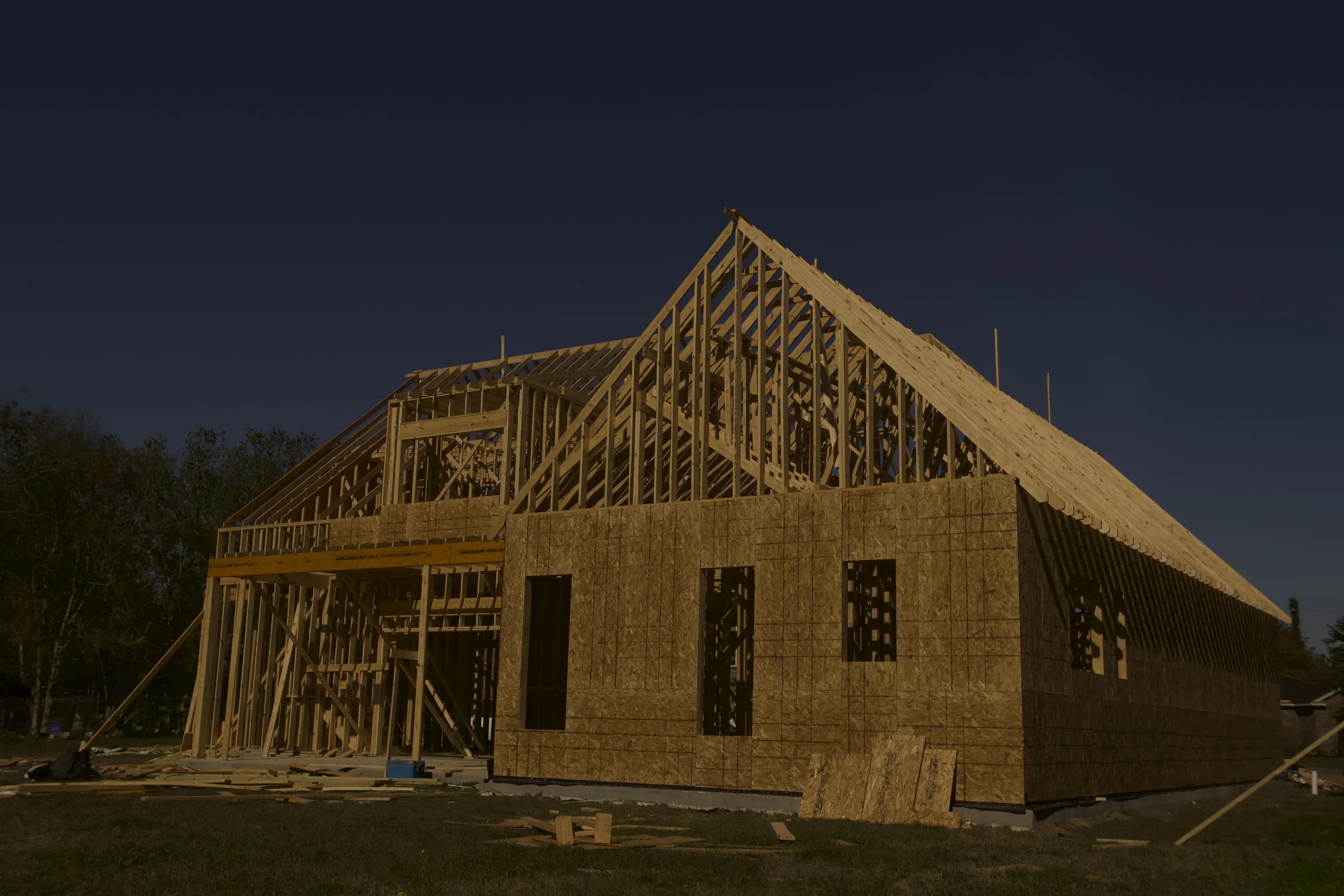
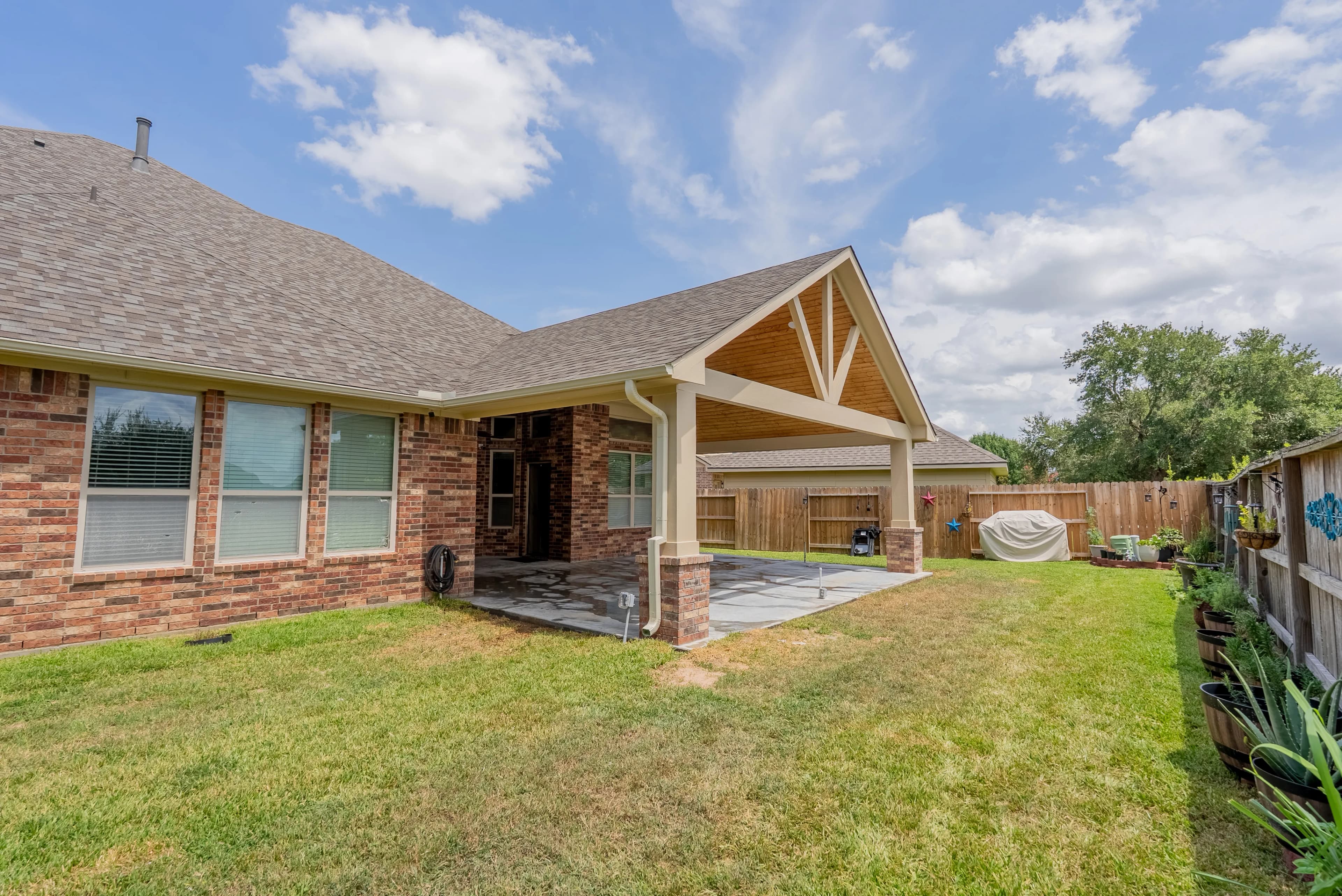
The eave on a 1950s or 1960s Meyerland ranch home often sits lower than the eave on a newer two-story house, and that low line decides the cover's design. If we tie the new roof into the existing eave at the same pitch, the outer edge of a deep cover can drop low enough to feel like a tunnel. Two fixes exist. We can flatten the pitch of the cover slightly with a stepped flashing detail at the wall, or we can run the new roof up over the existing eave and tie it into the main roof higher on the slope. The second reads more like original construction but touches more of the existing roof.
On a home that has been raised, the whole conversation changes. The house's eave is now several feet higher relative to the yard, so a cover at grade has plenty of headroom but a long reach up to the ledger, and a cover on a raised deck sits at the house's floor level with the same eave problem as before. We confirm the finished floor and eave heights with a level and a tape on the first visit. Freestanding covers on their own columns avoid the ledger entirely and make sense when the existing wall or the raised foundation would make an attached connection awkward or costly to flash properly.